.jpg)
Project Type
Professional
Timeline
Oct 2025
Team
1 PM
2 Engineers
Product Designer (Me)
Tools
Figma
Figma Make
What I did
- Defined MVP scope and product direction in close partnership with the PM.
- Generated the entire UI through Figma Make, prompting and iterating in hours instead of days.
- Handed off final designs via Figma Dev Mode for backend integration.
Background
Exploring vibe coding with AI-generated UI design
An experiment in vibe coding: building production-quality UI entirely from prompts in Figma Make. Prototyping time dropped from days to hours, with design judgment shaping what AI generated.
Problem
Information overload slows trading decisions
Traders are drowning in financial news, social media, and market chatter. Existing tools surface alerts but rarely explain the why behind a shift, leaving traders to guess in markets where every minute counts.
Research
Who are we designing for
Through user interviews, I identified three distinct trader personas with different needs and urgency levels.
| Persona | Most Pressing Need |
|---|---|
| Active Swing Trader | Specific, verifiable catalyst behind momentum, beyond vague sentiment scores |
| Hybrid / Part Time Trader | High conviction signals worth interrupting their job for, filtered from market noise |
| Long Term Investor | Immediate red flag alerts for risks threatening core investment thesis |
What traders told us
From those interviews, we uncovered recurring frustrations that shaped our design direction.
"Every tool gives me a number with no story behind it."
Trust
"I keep getting alerts about stocks I don't even own."
Personalization
"By the time the alert comes in, the move is over."
Timeliness
What existing tools are missing
I audited existing tools and found that while some surface sentiment scores or link to raw sources, none clearly explain the reasoning behind a sentiment shift in plain language or connect it to the user's specific portfolio context. This gap became the design principle for TickerPulse: every alert must answer "why now."
| Tool | Source Linking | Explains "Why" |
|---|---|---|
| Bloomberg Terminal | Yes, links to articles | No |
| TradingView | No | Partial, technical only |
| StockTwits | No | No |
| TickerPulse | Yes, with evidence | Yes, plain language |
Solution
Proactive AI that explains why, not just what
TickerPulse monitors news and social sentiment for the user's portfolio. Every alert explains "why now" with linked sources and filters out the noise so traders can act faster with confidence.
| Step | What Happens |
|---|---|
| 1. Monitor | Continuously ingests financial news and social media streams, performs rapid sentiment analysis, and filters routine chatter to flag significant deviations |
| 2. Analyze | Uses statistical analysis to confirm sentiment shifts, contextualize with historical price and related news, and create actionable summaries |
| 3. Alert | Delivers explainable alerts with concise verdicts and direct evidence links, transitioning from static dashboards to proactive insights |
Final Design
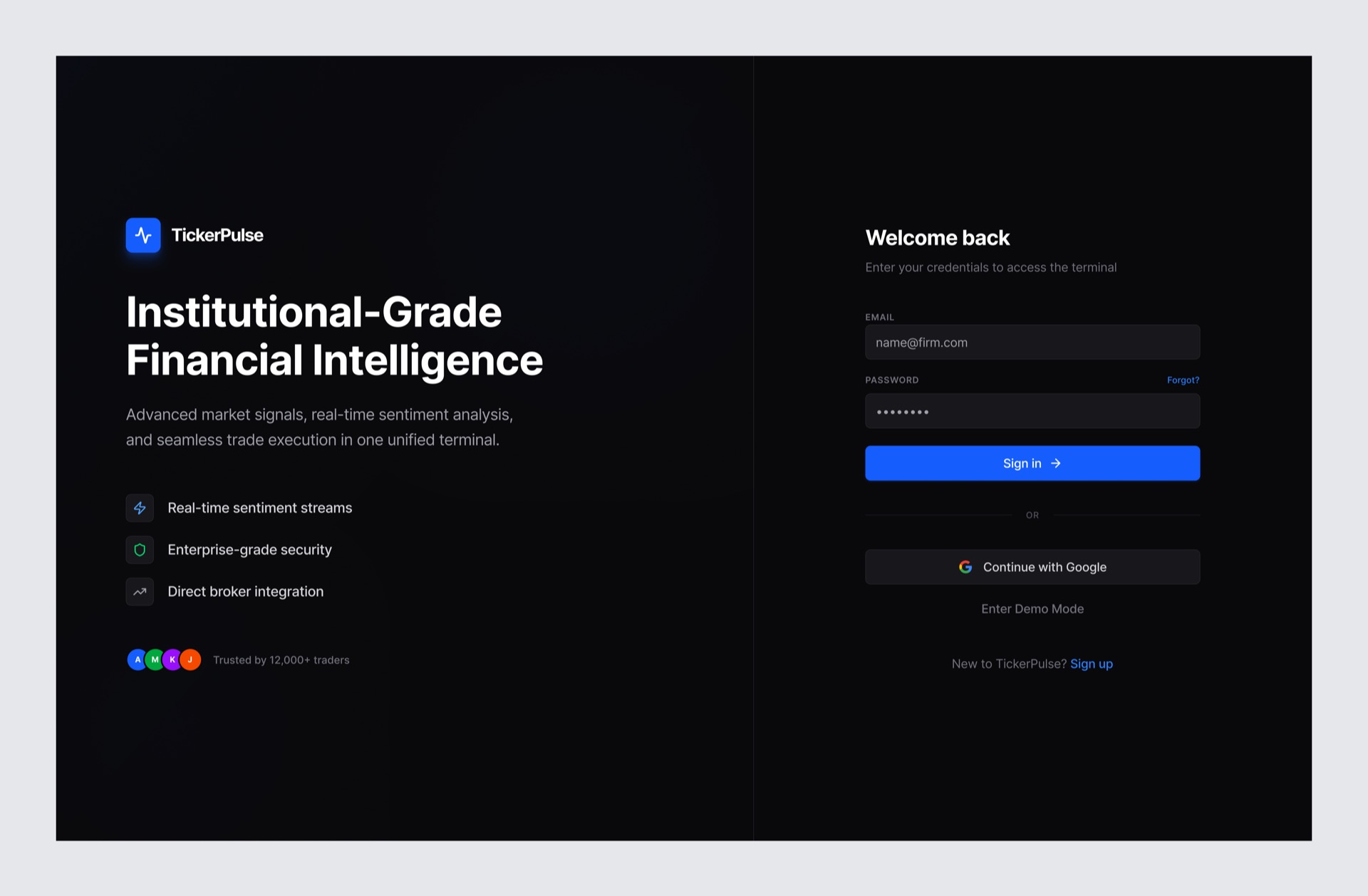
Sign in with institutional tone
A credible, high-trust onboarding that positions TickerPulse as a professional terminal from the first click.
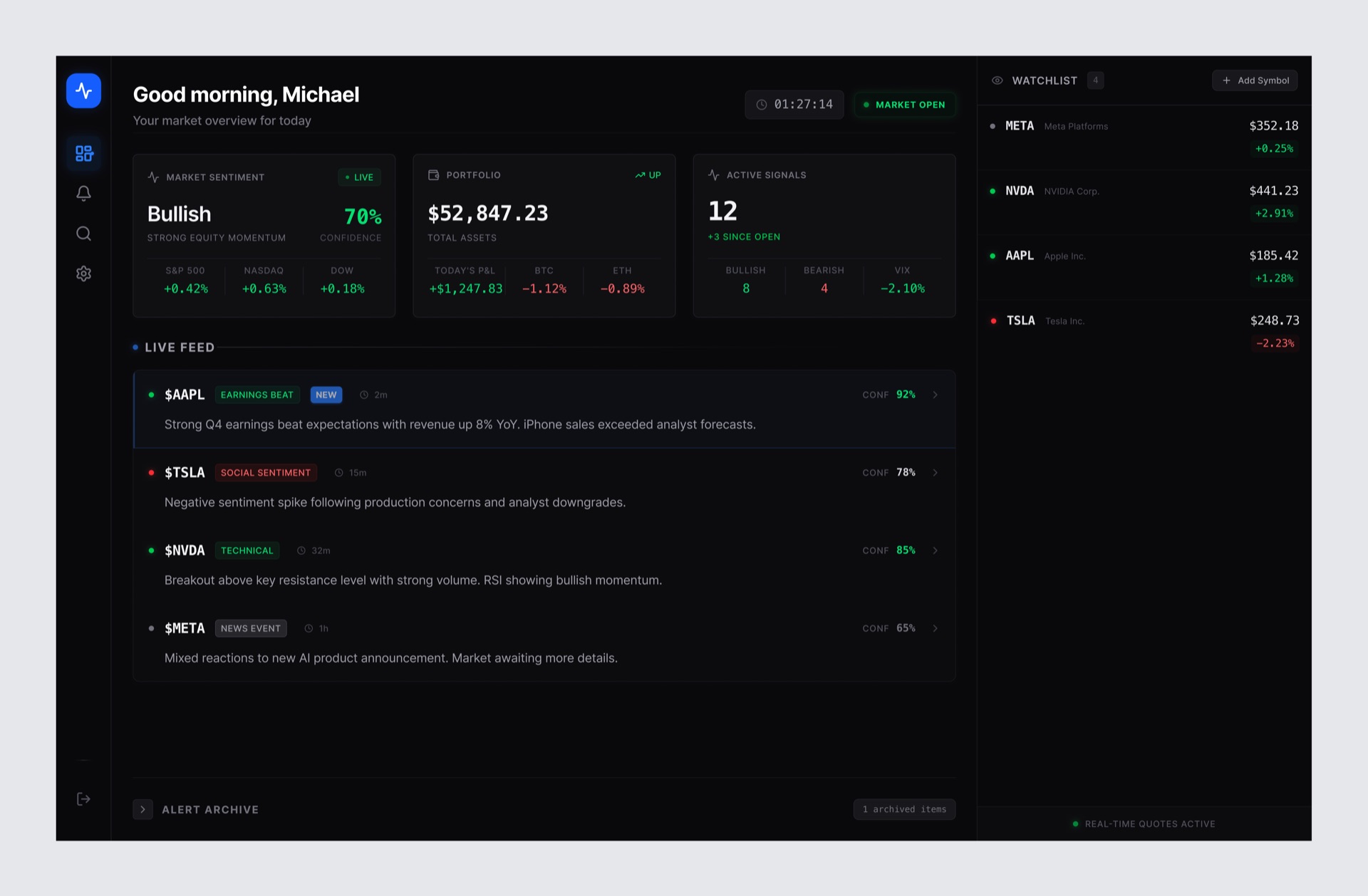
Dashboard at a glance
Real-time sentiment, portfolio status, and a live alert feed in one unified view, with the watchlist always visible.
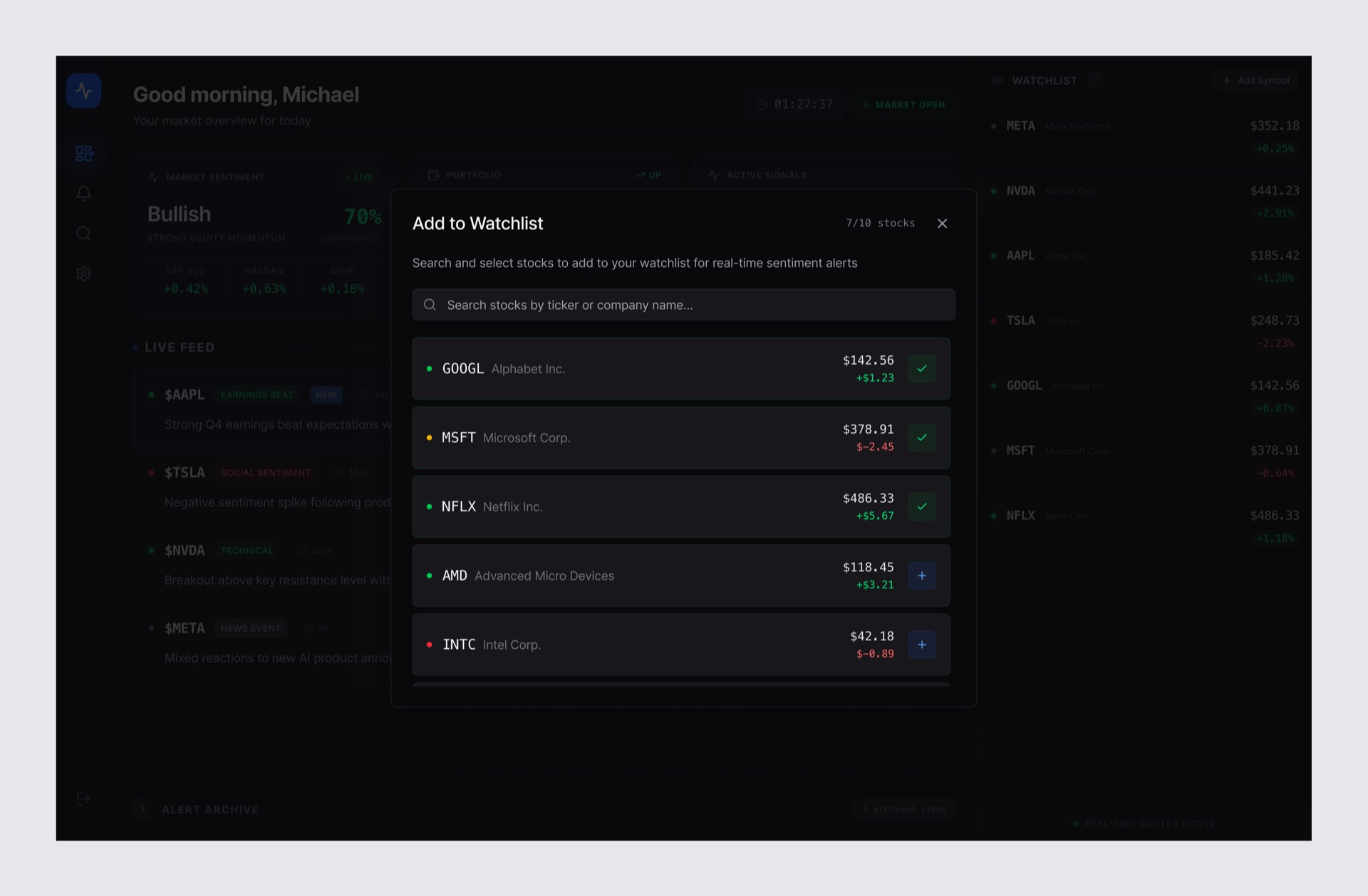
Build a personalized watchlist
Focus the system on the tickers that matter most, so alerts stay relevant and noise stays out.
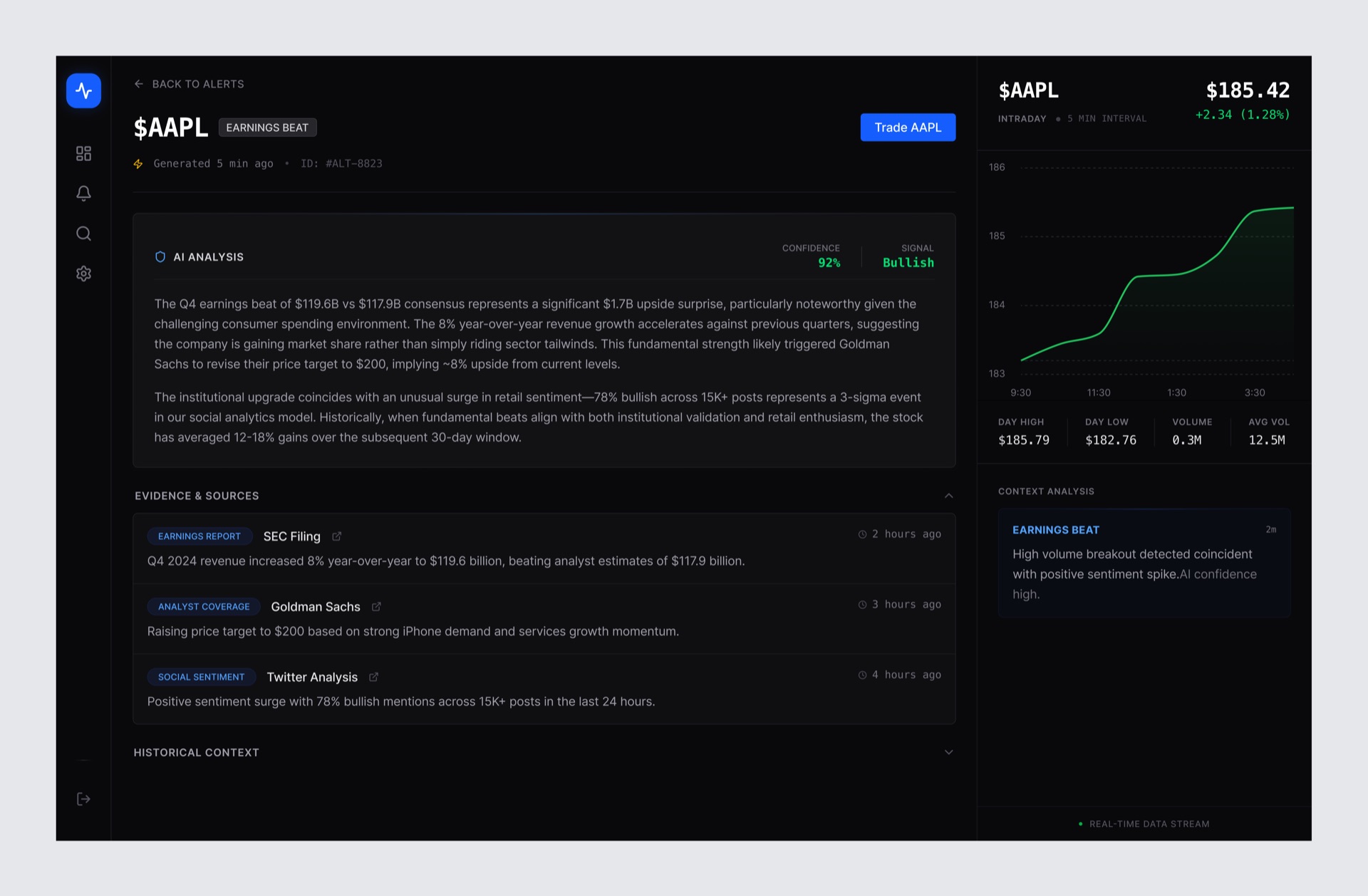
Every alert explains why now
AI analysis backed by linked evidence from news, analyst coverage, and social sentiment so traders can verify before acting.
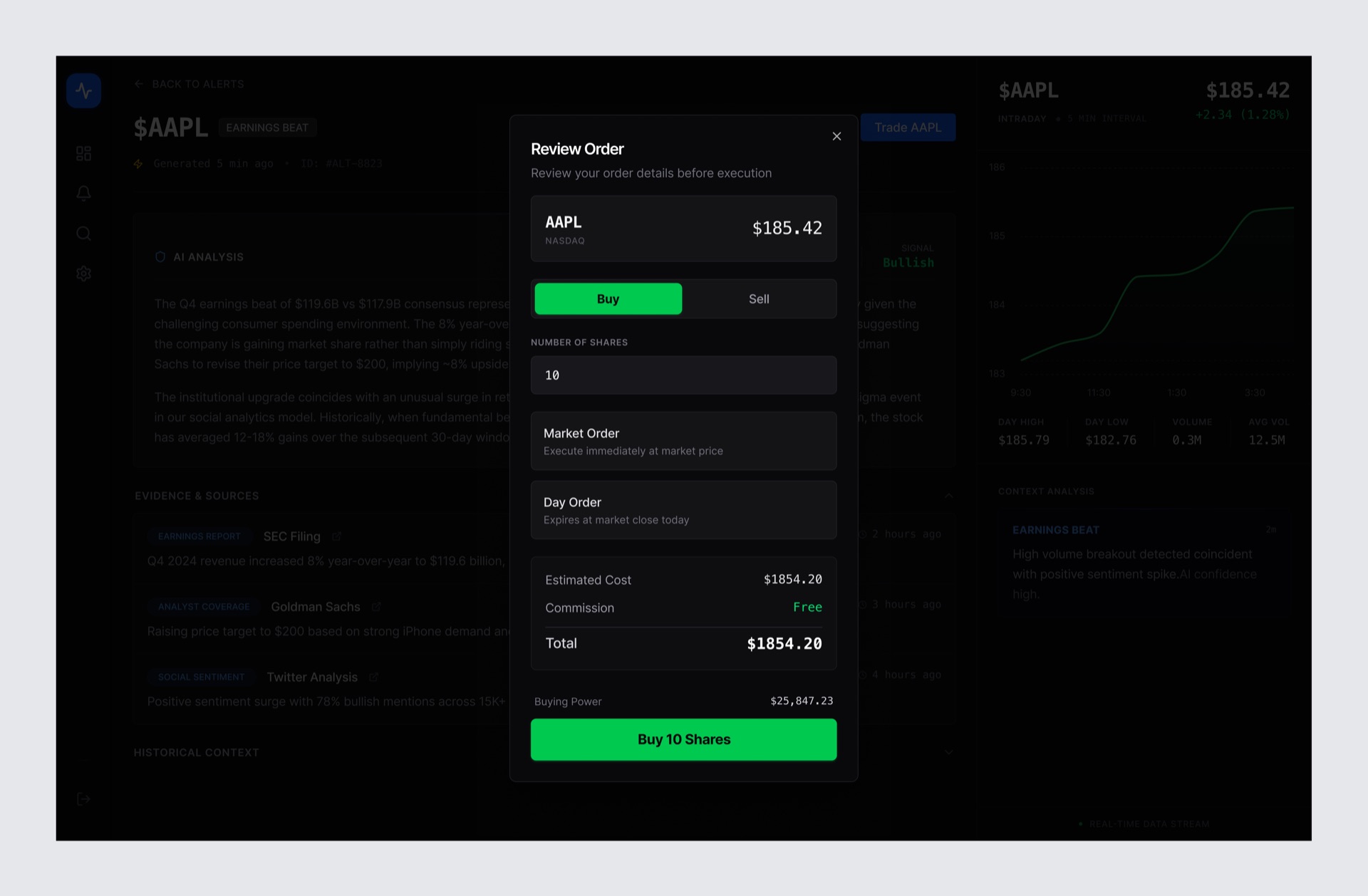
From insight to trade in one flow
When the signal is clear, users can review and execute the order without leaving the context of the alert.
Reflection
What I learned
When AI can generate pixel-perfect UI from prompts, the designer's role shifts from pixel pushing to taste gating. My job was to shape the intent, evaluate what the AI produced, and guide it toward the right vibe and experience. The line between designer and developer has never felt more blurred.