
Project Type
Personal
Timeline
May 2026
Team
Lead Designer (Me)
1 Product Designer
Tools
HTML + Tailwind
Claude Code
What I did
- Led the design of the ritual as one continuous three minute flow, from the first feeling pick to the sleep screen.
- Wrote the ten story templates, two per dreamland, and the substitution system that lets tonight's picks shape their language.
- Built the working app in code with Claude Code, a single file prototype that runs the full ritual end to end.
Recognition
- Red Dot Winner, Red Dot Design Award 2026 View ↗
- NYPDA Silver Winner, NY Product Design Awards 2026 View ↗
Problem
The same story, every night
Bedtime is repetitive by design; children find comfort in the familiar. But the story itself rarely catches what the child actually carried into bed. The day's small frustrations, the new feeling without a name, the question never asked. Parents reach for the same five books, or skip the story entirely.
Generic AI storytellers don't fix this. A chat box at bedtime is the wrong instrument. A pre-reader can't type, and a tired parent doesn't want a prompt window. The product that meets this moment has to be quieter than that.
Insight
Children don't process the day in words
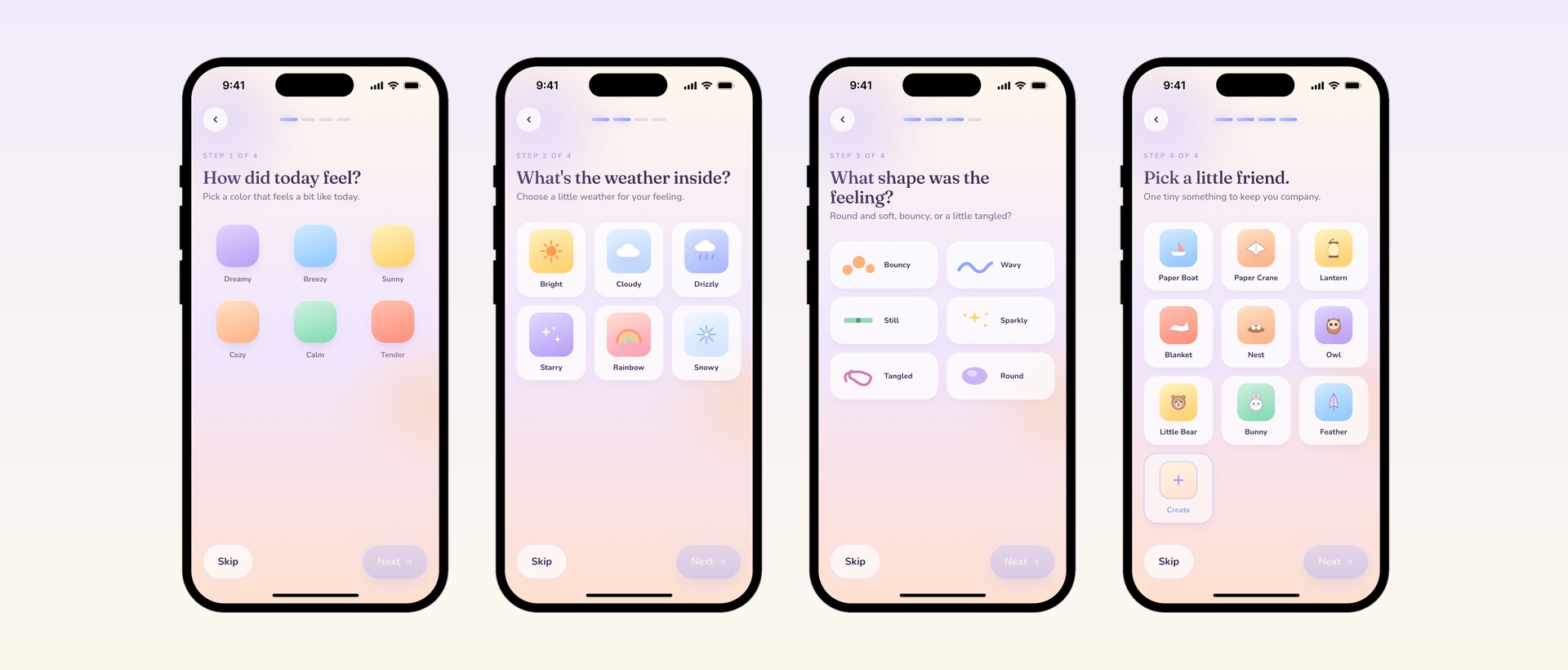
A three year old can't say she felt overwhelmed at preschool. But she can point to a color. She can say it felt like rain. She can pick the shape of the feeling out of six soft drawings, and she has a small companion in mind even if she can't name why. Four nonverbal picks, a color, a weather, a shape, and a little friend, make the day legible to a system without ever asking the child to put a feeling into language.
The ritual
From the day to the goodnight, in three minutes
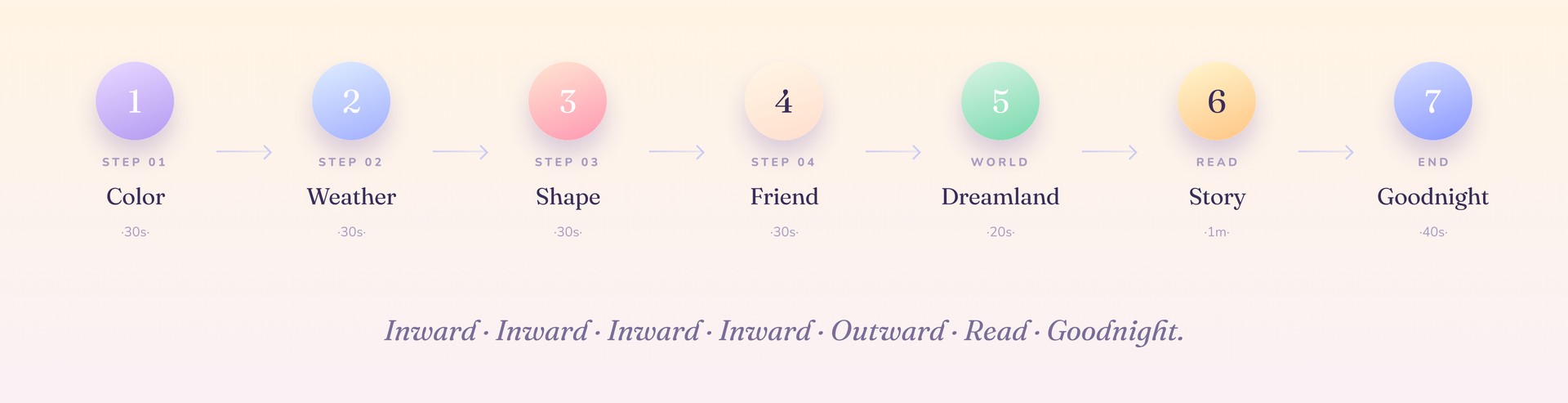
Seven moments. The first four are inward: how today felt, answered one tap at a time. The fifth turns outward to where tonight's story should happen, and the last two close the night. Every step can be skipped, and words are never required.
One night
How a feeling becomes a story
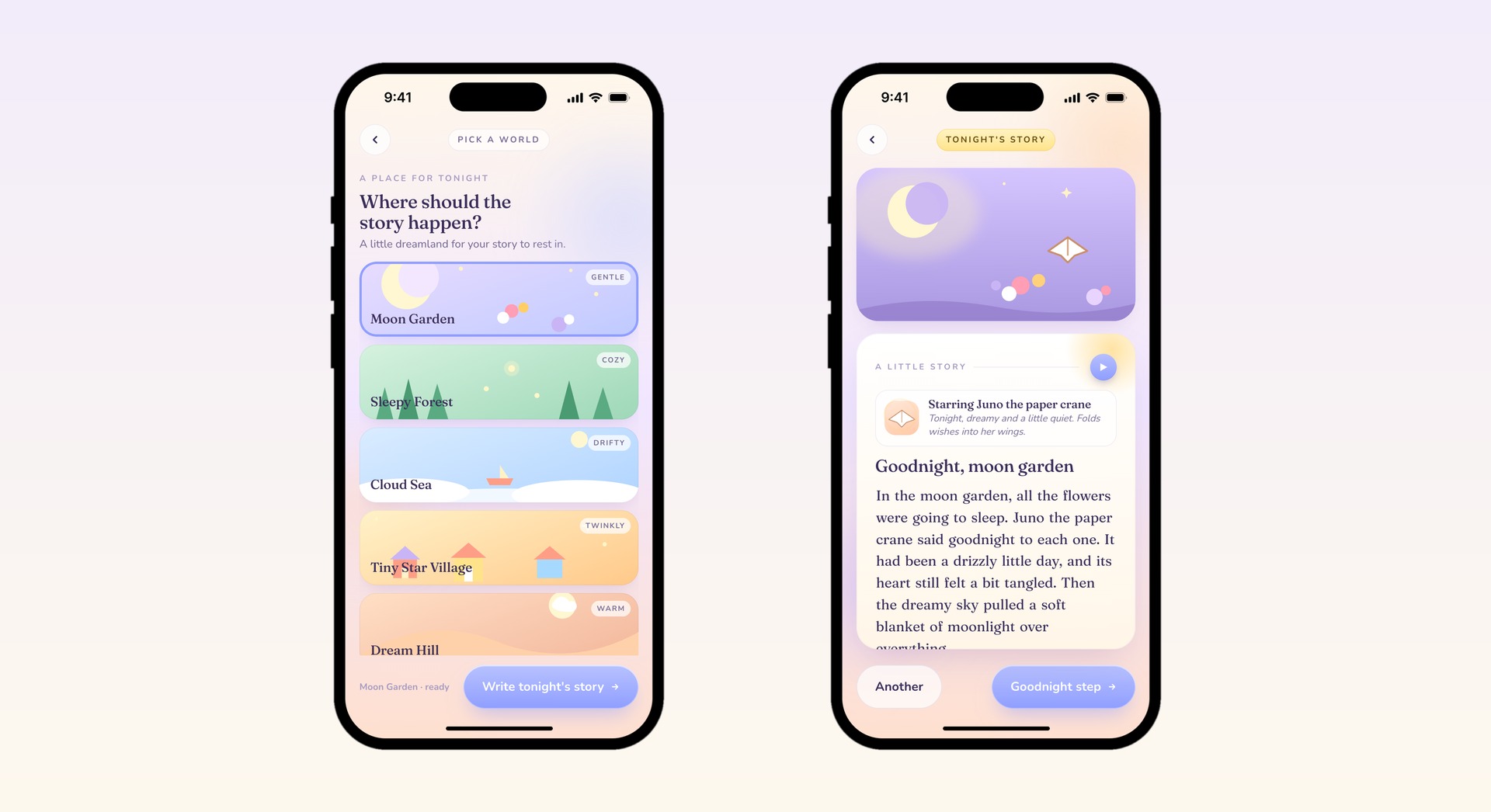
Tonight's picks compose the story's emotional palette. Lavender reads as dreamy, rain becomes a drizzly little day, a tangled shape leaves a heart still a bit tangled, and the paper crane takes the starring role. The same dreamland can hold many nights; the difference is the child.
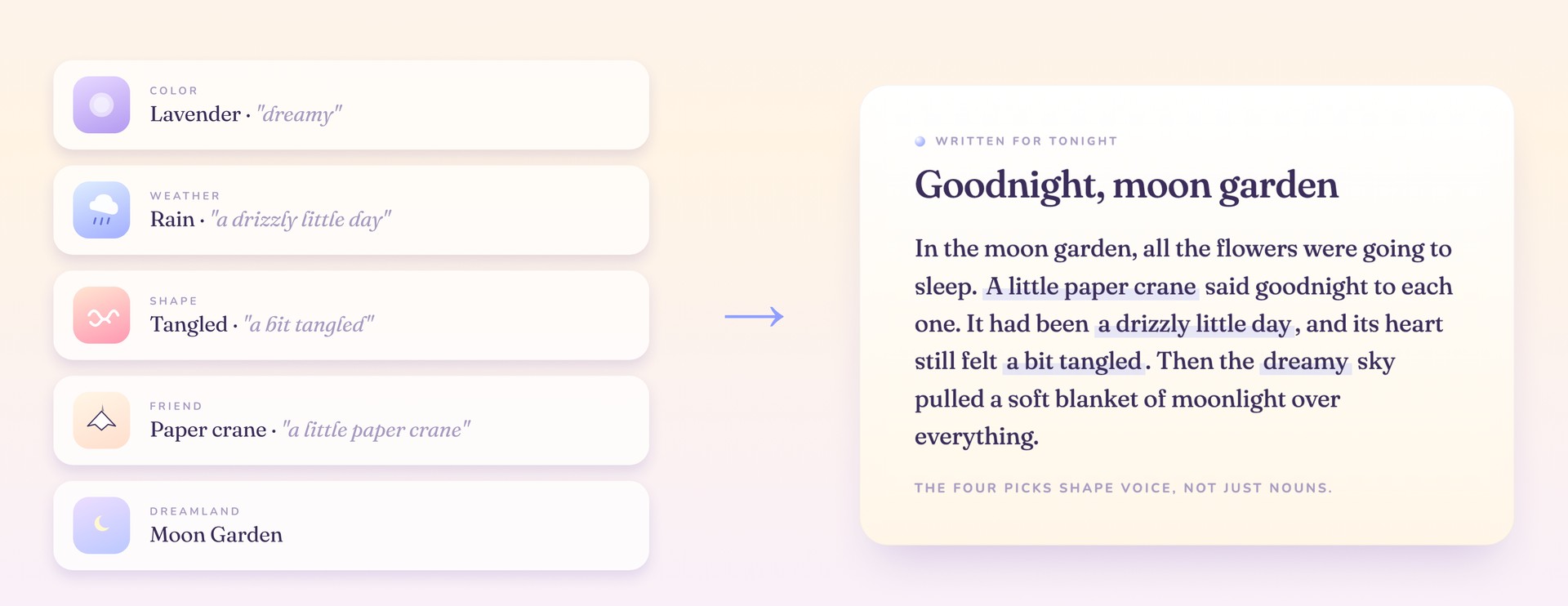
In the working build, ten handwritten templates, two per dreamland, stand in for the model. The four picks pour into their placeholders and shift the voice, not just the nouns, so every night reads differently while the language stays hand tuned for reading aloud. Short sentences, concrete images, picture book vocabulary.
Design language
Bedtime-warm, quietly geometric
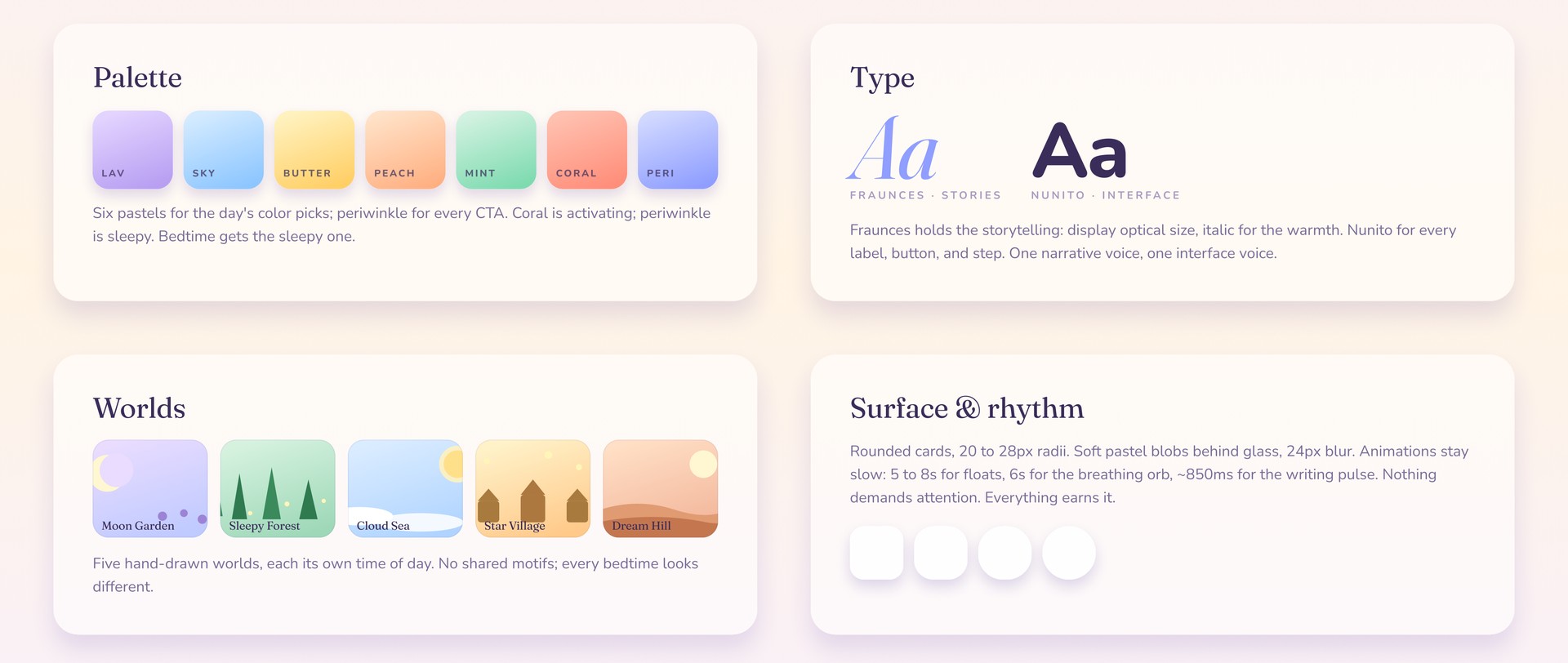
Six pastels carry the day's color picks, but every button is periwinkle. Coral is activating; periwinkle is sleepy. Bedtime gets the sleepy one. Fraunces holds the storytelling and Nunito holds the interface, one narrative voice and one interface voice. Nothing in the system demands attention.
Principles
Quiet, on purpose
Four choices the product is built from. Each one closes a door other AI apps leave open.
Invisible AI
No chat, no model picker, no regenerate. A brief writing pulse and the line "written for tonight" prove the story is fresh. The intelligence is the medium, never the interface.
Nonverbal first
A pre-reader can't type, but she can point. Every required input is a tap on a colored chip, a soft icon, a face. Words are an output, not an input.
One of each
One color, one weather, one shape, one friend, one world, one story. Not options to compare; picks to commit to. Choice fatigue is the enemy of bedtime.
Bedtime, not engagement
The last screen is a dim twilight with no call to action, no streak, no tomorrow's story. A bedtime app that fights for attention at bedtime has already lost the brief.
Final Design
It starts with an invitation
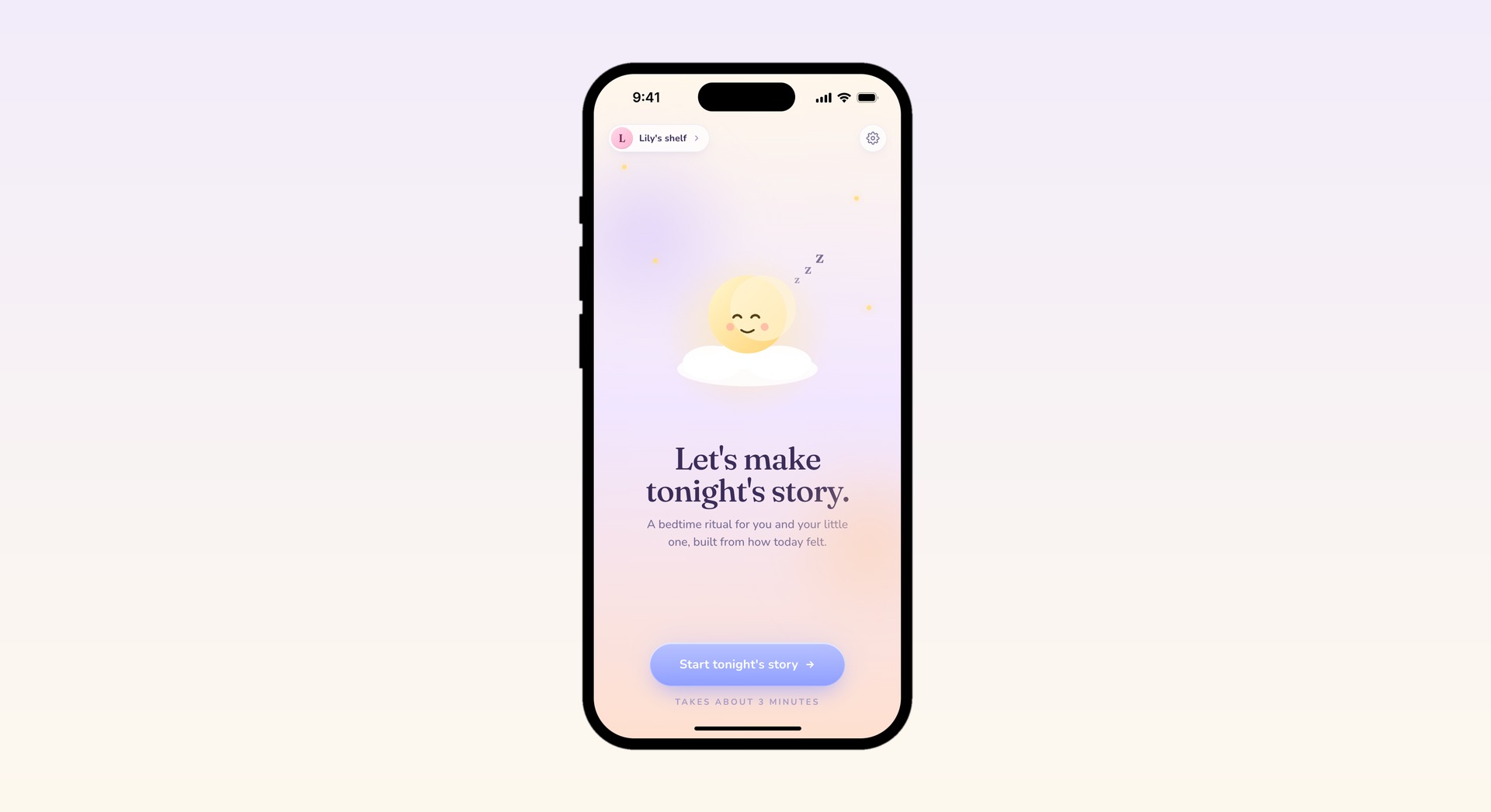
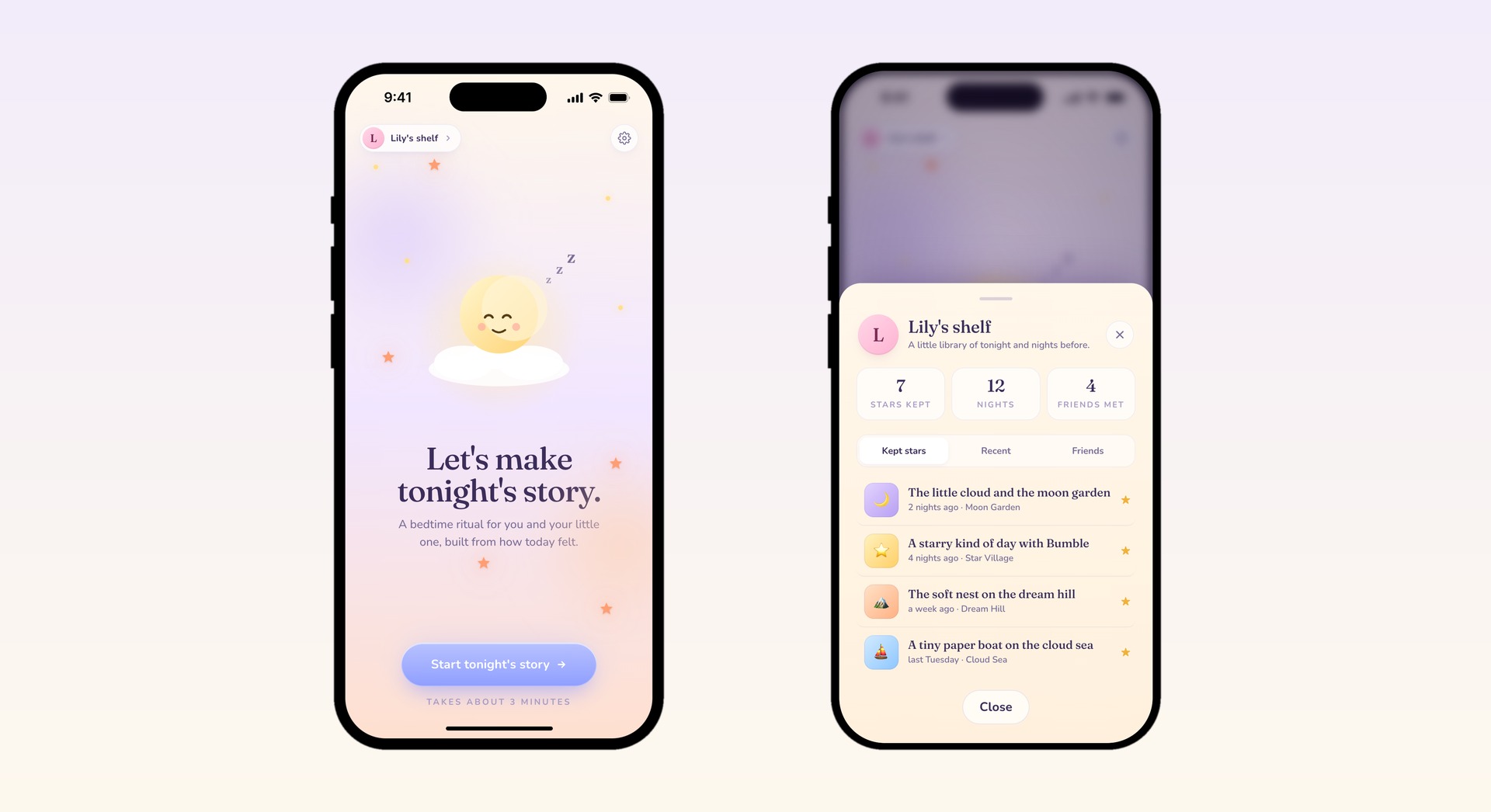
Lumo the moon, asleep on a cloud, and one button. The promise underneath is the whole scope of the product: takes about three minutes.
Four picks, no typing
Color, weather, shape, and a little friend. Each screen asks one soft question and accepts one tap for an answer.
Nine friends, or make one up
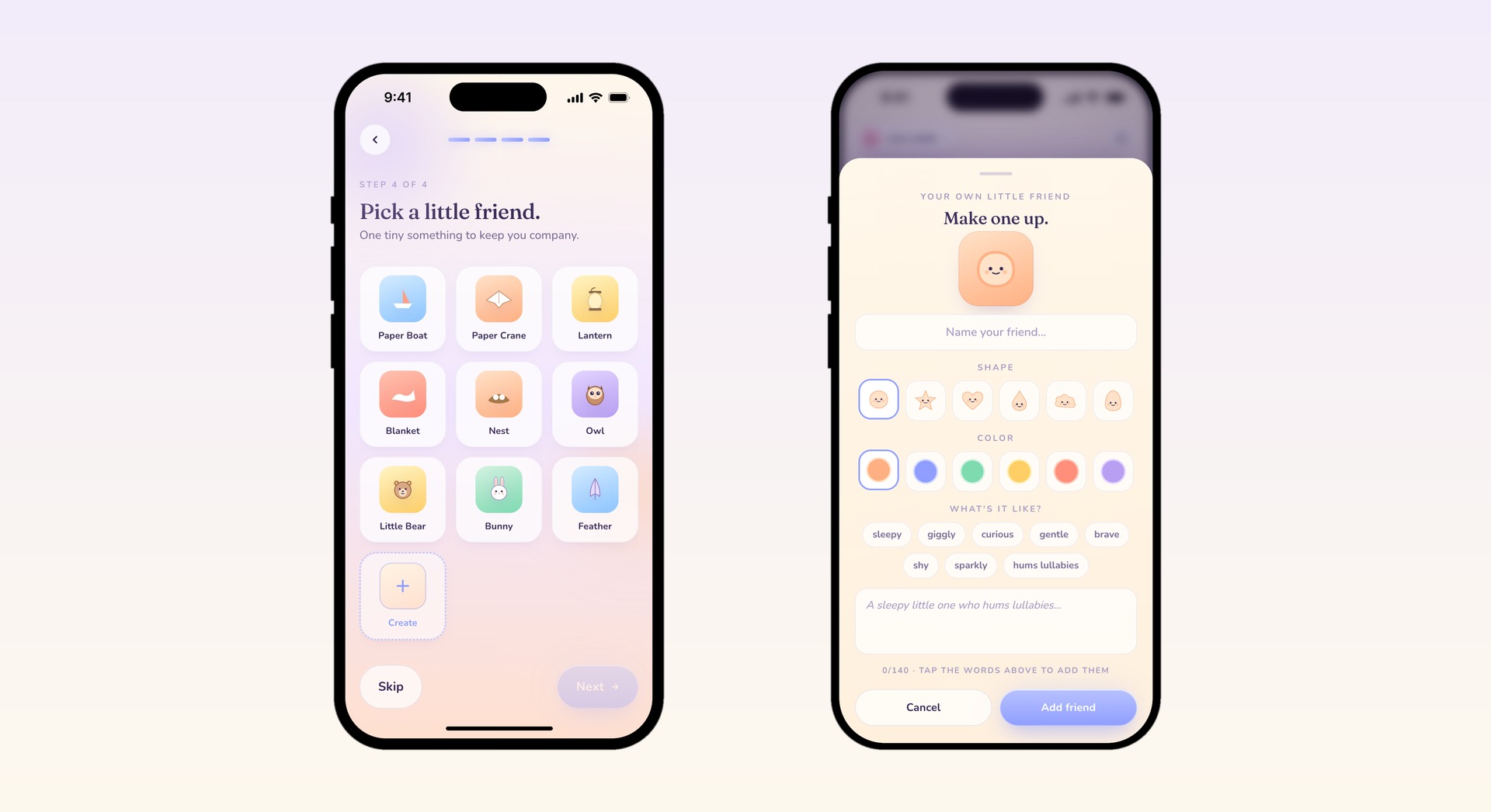
The companions are deliberately portable, a paper boat, a lantern, a little bear, so any friend fits any world. The Create a Friend sheet lets the child invent their own: a name, a shape, a color, a few words about what it's like. It saves to the device and stars in every story after.
Then the night turns outward
The fifth moment is imaginative rather than reflective: where should tonight's story happen? Five dreamlands, then the story arrives, written for tonight.
The last screen asks for nothing
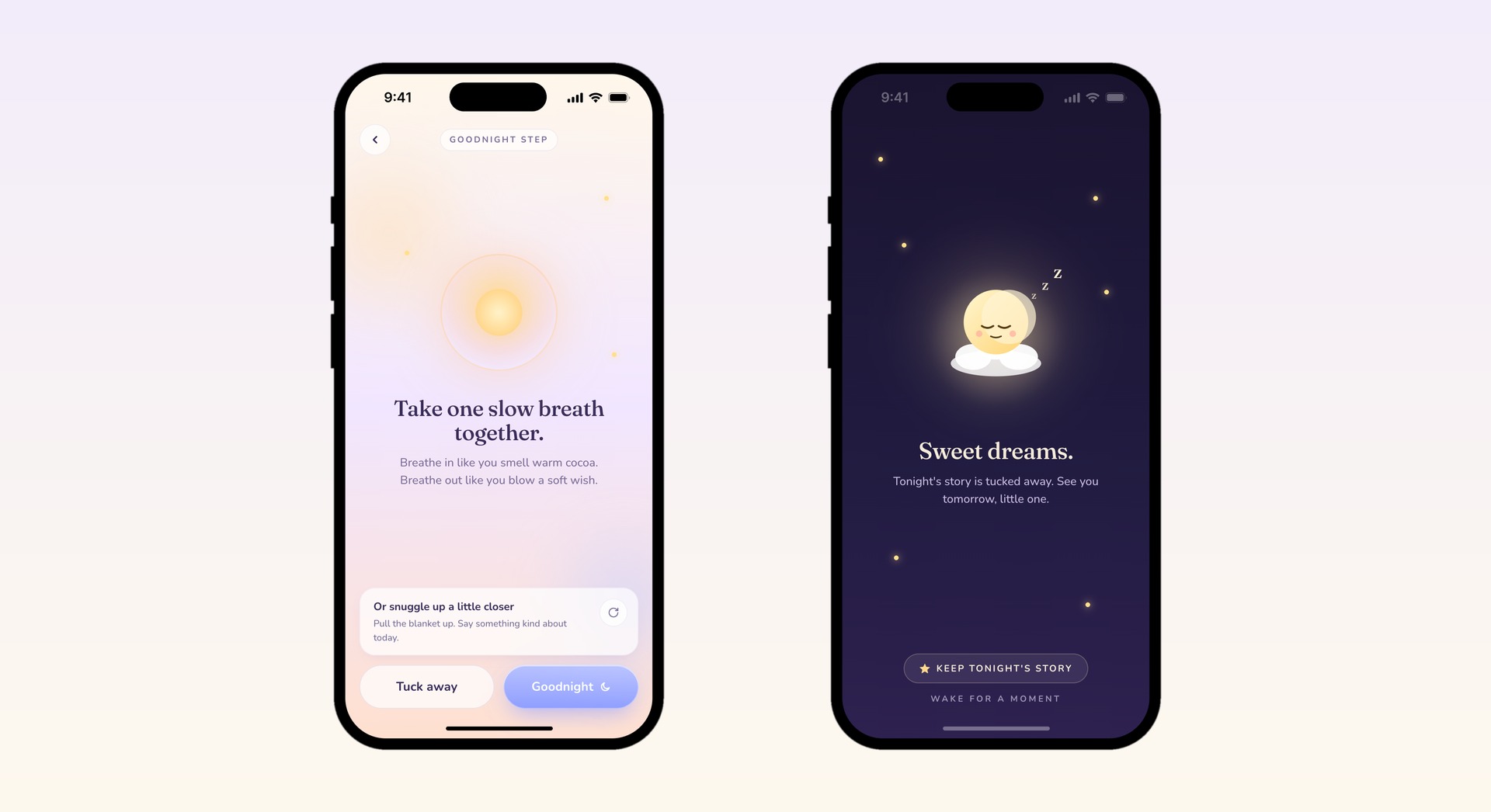
After the story, one gentle action closes the night: a slow breath together, a small wish, a goodnight wave. Then Sleep Mode dims the screen and stops asking. No app should win an argument with sleep.
Tonight's story becomes tomorrow's star
Kept stories return as a constellation on the welcome screen, each star back where its night left it, and Lily's shelf holds the library: stars kept, nights, friends met. The ritual recurs because the night before kept something worth coming back to, not because the app demands it.
Quiet controls for the grown-up
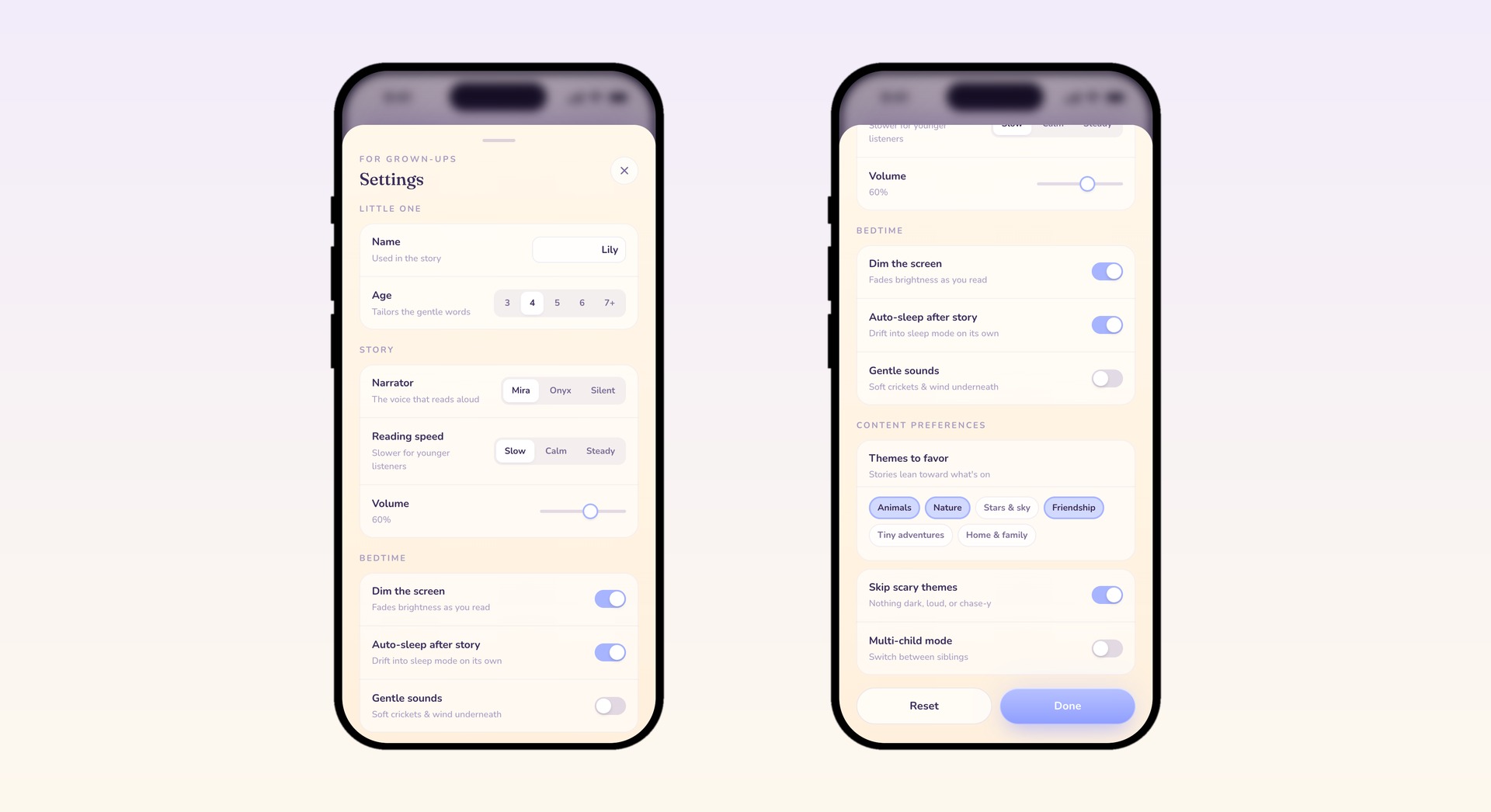
Behind a small gear, one sheet holds everything the adult needs and the child never sees. The child's name flows into the story, age tailors the gentle words, a narrator reads at a pre-reader pace, and theme chips steer what tonight's stories lean toward. Everything lives on the device. No account needed.
Try it live
Tonight's ritual, running right here
This is the working build, not a video. Make the four picks, choose a dreamland, and read what arrives, about three minutes, same as a real bedtime.
Reflection
The design work was the input, not the output
StoryBloom is an AI product where the AI never appears. The hard problem wasn't generating a story, it was the input: a three year old cannot type a prompt, so the interface had to make a feeling legible in four taps. Once the day was legible, everything downstream got quieter. The story arrives without a chat box, the ending asks for nothing, and the writing stays hand tuned. Building it taught me that the craft in AI products is deciding what the system needs to know and how a person hands it over, and that the most childlike interface in the product took the most adult restraint to design.